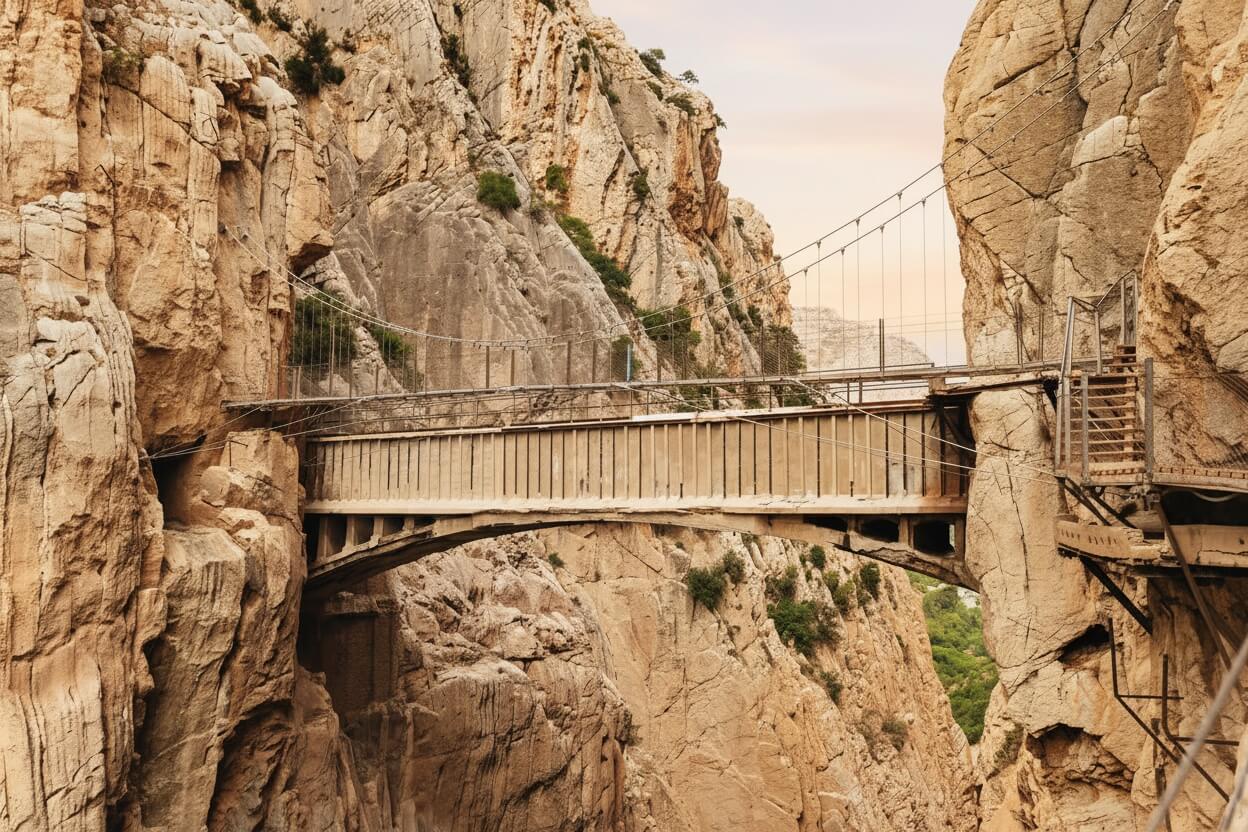
The Caminito del Rey is one of the most spectacular hiking routes in Europe, carved into the vertical walls of the Desfiladero de los Gaitanes gorge in the province of Málaga, Andalusia. The walkway runs for 7.7 kilometres through dramatic limestone cliffs that rise over 400 metres above the Guadalhorce River, at times narrowing to just 10 metres wide. Originally built in the early 20th century as a service path for hydroelectric plant workers, the path was restored and reopened to the public in 2015 and has since become one of Spain’s most visited natural attractions.
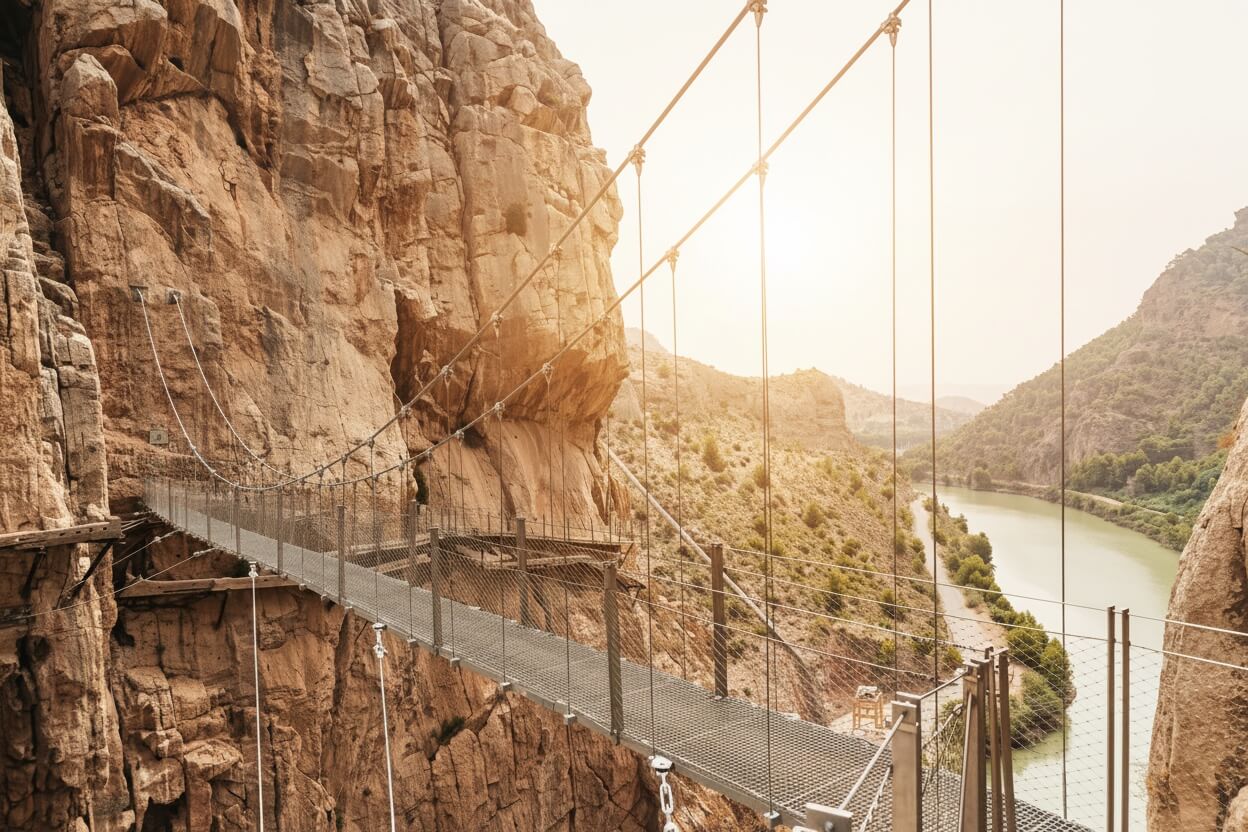
The route offers an unforgettable combination of engineering heritage, geological spectacle, and Andalusian landscapes. Walkers cross suspended hanging bridges, pass through tunnels carved into the rock, and traverse narrow boardwalks bolted to sheer cliff faces — all while looking down on turquoise river waters and up at soaring griffon vultures. The experience is suitable for reasonably fit visitors aged 8 and over, making it a genuinely extraordinary day out in southern Spain.
History and Origins
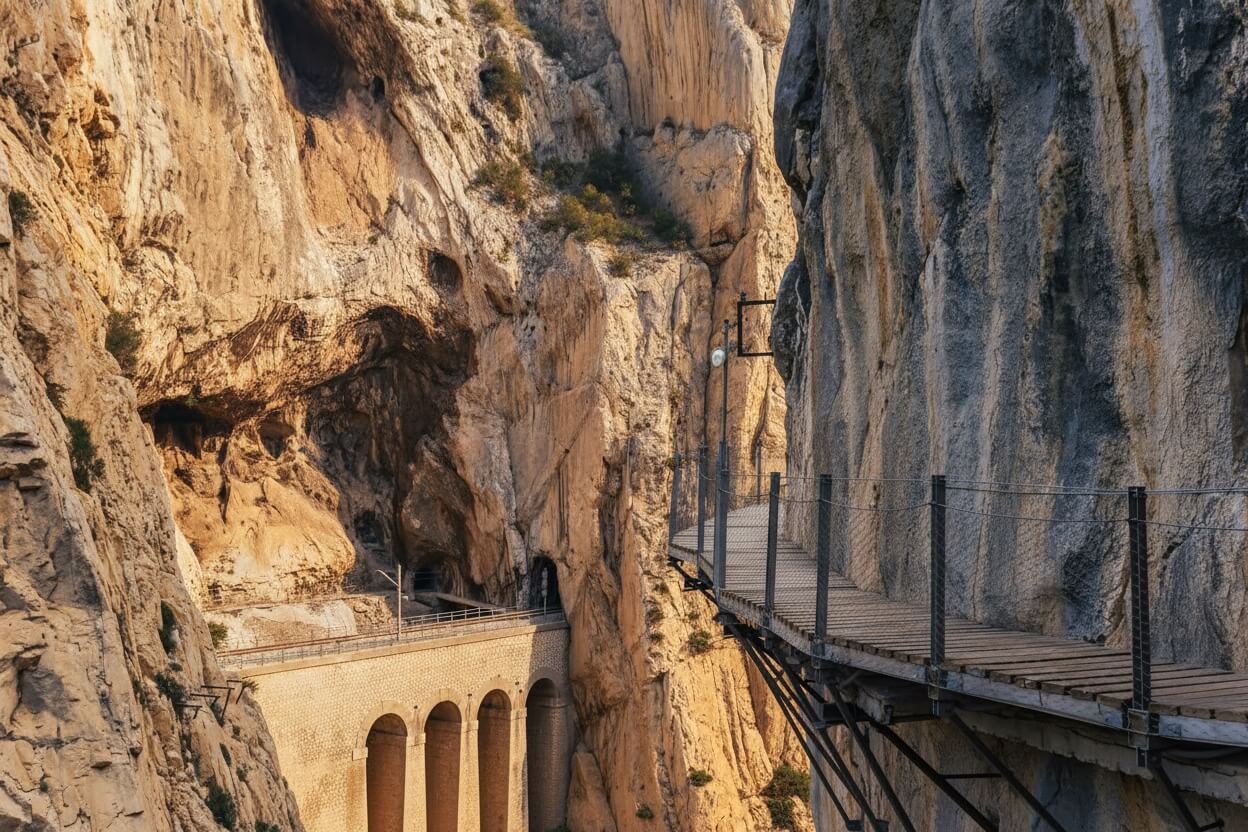
The Caminito del Rey takes its name — “The Little Path of the King” — from King Alfonso XIII, who walked the route in 1921 to inaugurate the Chorro Falls Dam and the Gaitanejo Dam, the two hydroelectric structures the path was built to connect. Construction began around 1901 under the direction of the Sociedad Hidroeléctrica del Chorro, and the narrow concrete ledge was used for decades by maintenance workers transporting materials between the two dams.
By the late 20th century, the original path had fallen into severe disrepair. Despite the obvious danger, thrill-seekers continued to access it illegally, resulting in several fatal accidents. Following the deaths of five climbers in the late 1990s and early 2000s, regional authorities closed the gorge. The Junta de Andalucía launched a major restoration project in 2011, investing more than nine million euros to rebuild the walkway safely. The restored Caminito del Rey opened on 28 March 2015 to international acclaim.
The Route: What to Expect
The Caminito del Rey is a linear, one-way route that begins at the northern entrance in Ardales and ends at the southern exit in El Chorro. It divides into two distinct sections:
- Northern section (Valle de Hoyo): a 4.8-kilometre natural path through pine woodland and along the reservoir shoreline, with gentler terrain and views of the Conde del Guadalhorce reservoir
- Gorge section (Desfiladero de los Gaitanes): the 2.9-kilometre clifftop walkway, featuring original concrete ledges alongside the restored modern boardwalk, two tunnels, and the iconic hanging bridges
The route takes between 3 and 4 hours at a comfortable pace, including time for photographs and rest stops. No technical climbing skills are required — good walking shoes and a reasonable level of fitness are all you need.
Records and Curiosities
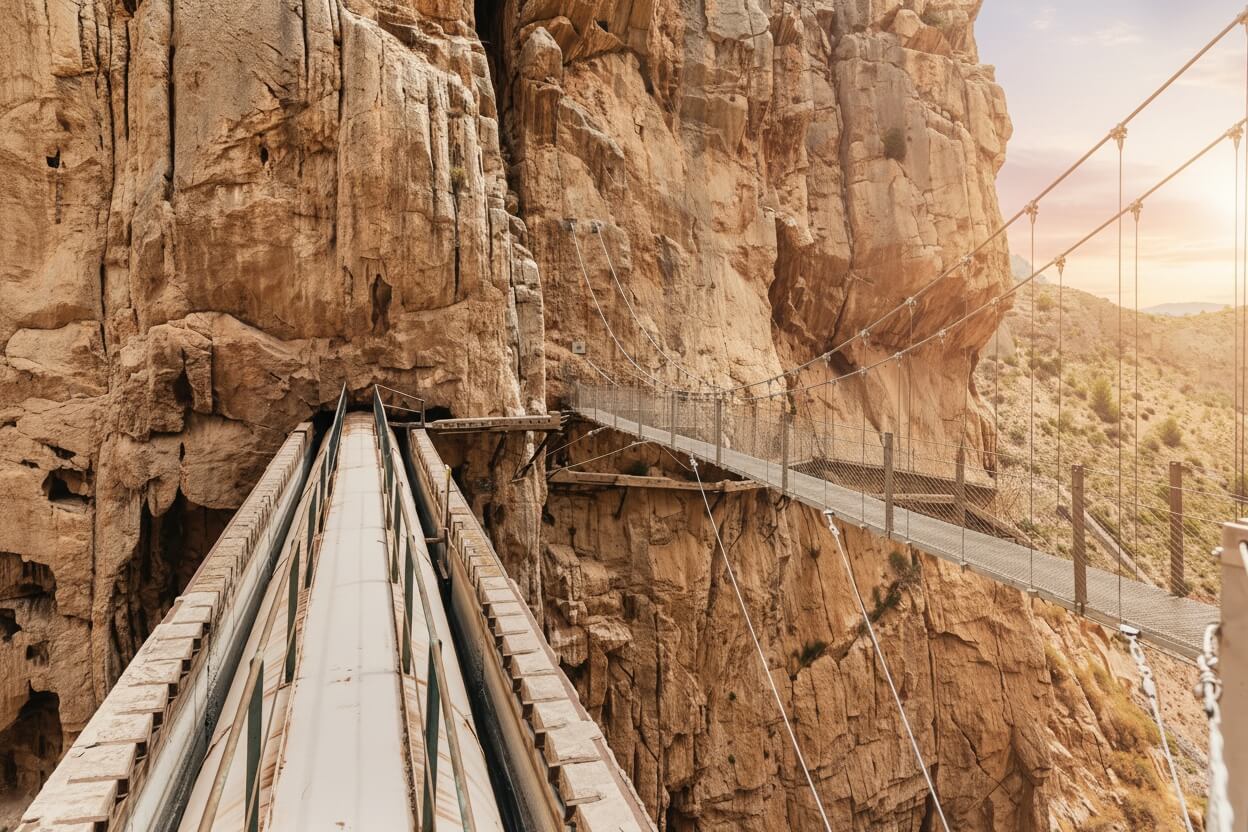
Few hiking trails in the world combine industrial heritage, natural drama, and sheer verticality the way the Caminito del Rey does. Some remarkable facts that explain its enduring appeal:
- The gorge walls reach over 400 metres in height, making the Desfiladero de los Gaitanes one of the deepest gorges in Spain
- At its narrowest point, the gorge is just 10 metres wide — a geological slot canyon of extraordinary proportions
- The original workers’ path, built around 1901, was only 1 metre wide with no safety railings of any kind
- The restoration cost more than €9 million and took four years to complete before reopening in 2015
- Daily access is strictly capped at 1,200 visitors — tickets regularly sell out four to six weeks in advance during peak season
- 2026 brings a new 110-metre suspension bridge — the longest in Spain — built to mark the tenth anniversary of the reopening
- The route passes by 19th-century railway infrastructure built for the Málaga–Córdoba line, still visible from the boardwalk
- Griffon vultures, Bonelli’s eagles, and peregrine falcons nest in the gorge cliffs and are frequently spotted overhead
These facts confirm that the Caminito del Rey is not just a dramatic walk — it is one of the most extraordinary combinations of natural geology and industrial history in southern Europe.
Flora, Fauna and Landscape
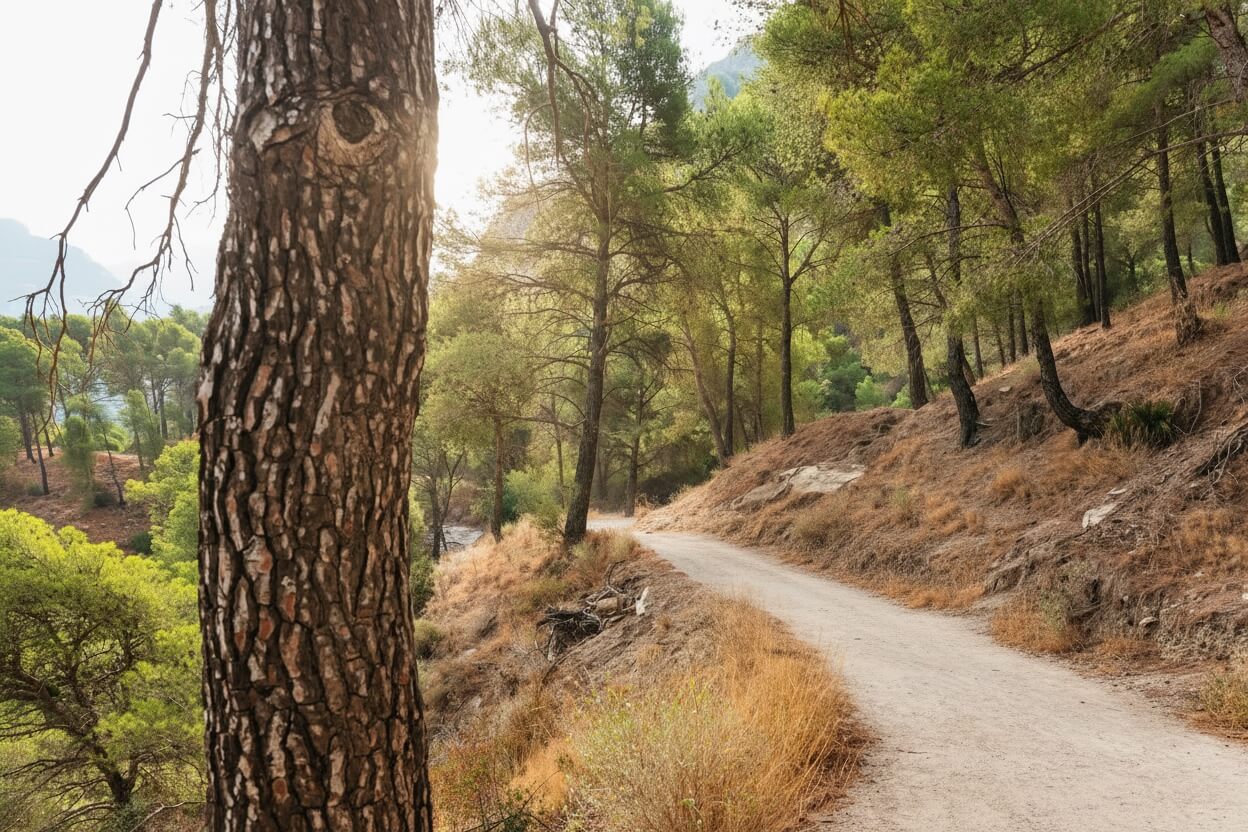
The Desfiladero de los Gaitanes Natural Park supports a rich Mediterranean ecosystem. The northern section passes through established pine and oak woodland, while the gorge itself hosts plant communities adapted to life on near-vertical limestone. The most celebrated wildlife of the area includes:
- Griffon vultures — large colonies nest in the gorge cliffs and individuals soar overhead reliably throughout the year
- Bonelli’s eagle and peregrine falcon — both breed in the area and can be seen hunting along the reservoir edges
- Otters in the Guadalhorce River below the boardwalk
- Iberian wild boar and mouflon in the surrounding hillsides
- Limestone fossils embedded in the gorge walls, visible from the boardwalk
The Conde del Guadalhorce reservoir, seen from the northern section of the route, turns a distinctive turquoise colour during calmer months — one of the most photographed features of the entire walk.
Practical Information
Address: Visitor Reception Centre, MA-444, 29550 Árdales, Málaga, Spain — Official website: caminitodelrey.info/en
How to get there from Málaga:
- By train: Cercanías line from Málaga María Zambrano or Málaga Centro-Alameda to El Chorro station — then shuttle bus to the northern entrance (~1 hour total)
- By car: Drive to the Visitor Reception Centre on the MA-444 road near Árdales — parking costs €2 per day, capacity 240 vehicles
- By shuttle bus: Every 30 minutes from El Chorro to the Visitor Centre — €2.50 per person (cash only)
- Organised tour from Málaga: Return transport included — ideal for visitors on the Costa del Sol without a car
Opening Times
- Spring/Summer (Mar–Oct)
- Tuesday–Sunday, 08:30–17:00
- Autumn/Winter (Nov–Feb)
- Tuesday–Sunday, 09:00–15:00
- Closed
- Mondays, 1 Jan, 24 Dec, 25 Dec, 31 Dec
- Duration
- 3–4 hours for the full route
- Minimum age
- 8 years old; under-18s must be with an adult
For tickets, pricing and the latest availability, see our tickets page.